


J.D. Power Reviews the 2026 Honda Odyssey
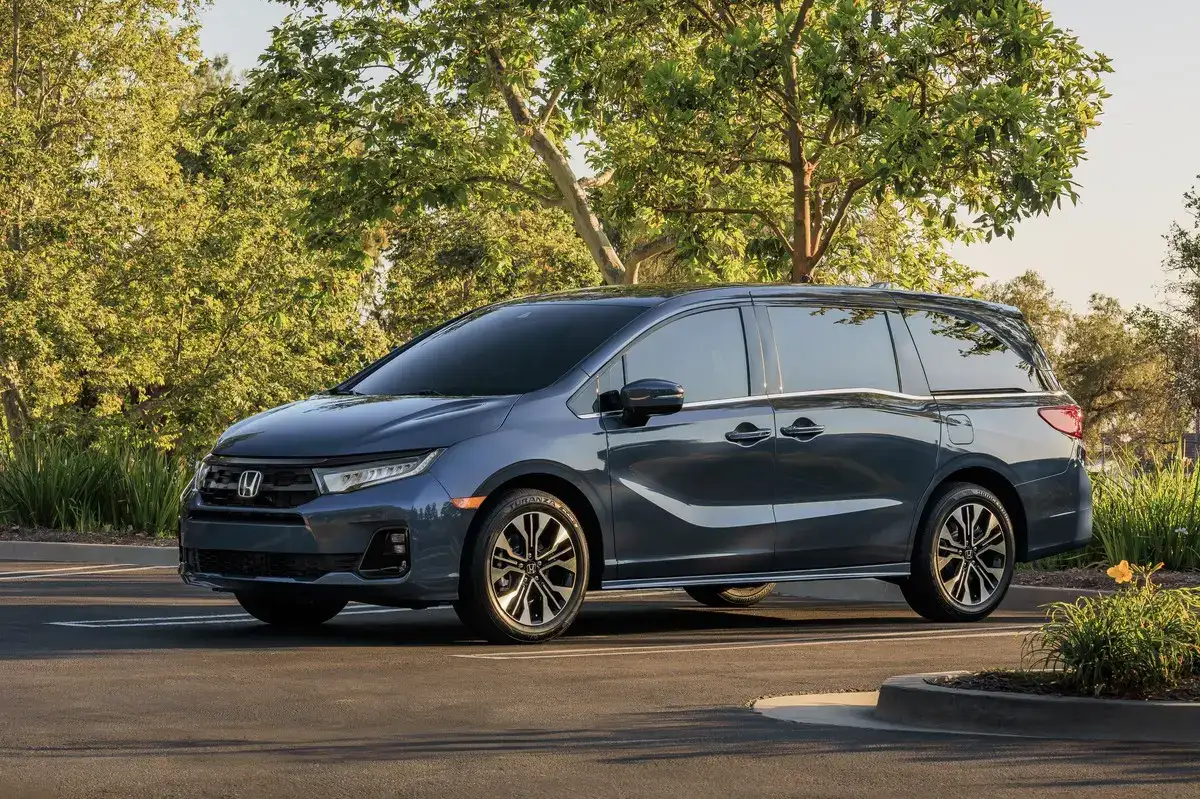
In Honda’s early years of bringing cars to the U.S., it quickly established a reputation for reliability and durability. It became known for its remarkable space allocation, making smaller cars as useful as larger ones. Unless it is surrounded by Hummers or Suburbans, there is nothing small about the 2026 Odyssey, and Honda has been just as diligent in its clever space allocation, making the Odyssey a true Swiss Army Knife of family transportation and utility. Famed automotive researcher J.D. Power reviewed the 2026 Odyssey, and Michael Hohl Honda summarizes what they found.
This country may be filled with SUVs from sea to shining sea. However, a minivan is still the best vehicle for a cross-country trip, with its spacious cabin and family-friendly creature comforts, and we will prove that by picking on some larger but less accommodating SUVs. The Honda approach to a minivan is a mix of innovation and tried-and-true elements. In the latter, we can start with the engine, a 3.5-liter V6 that Honda has been refining for years. In this application, it produces 280 horsepower and 262 lb-ft of torque, paired with a 10-speed automatic transmission. That is enough to easily propel the Odyssey around town or on the highway in a smooth, unstressed manner, while it is EPA-rated to deliver 28 mpg on the highway and 19 in the city, for a combined figure of 22*.
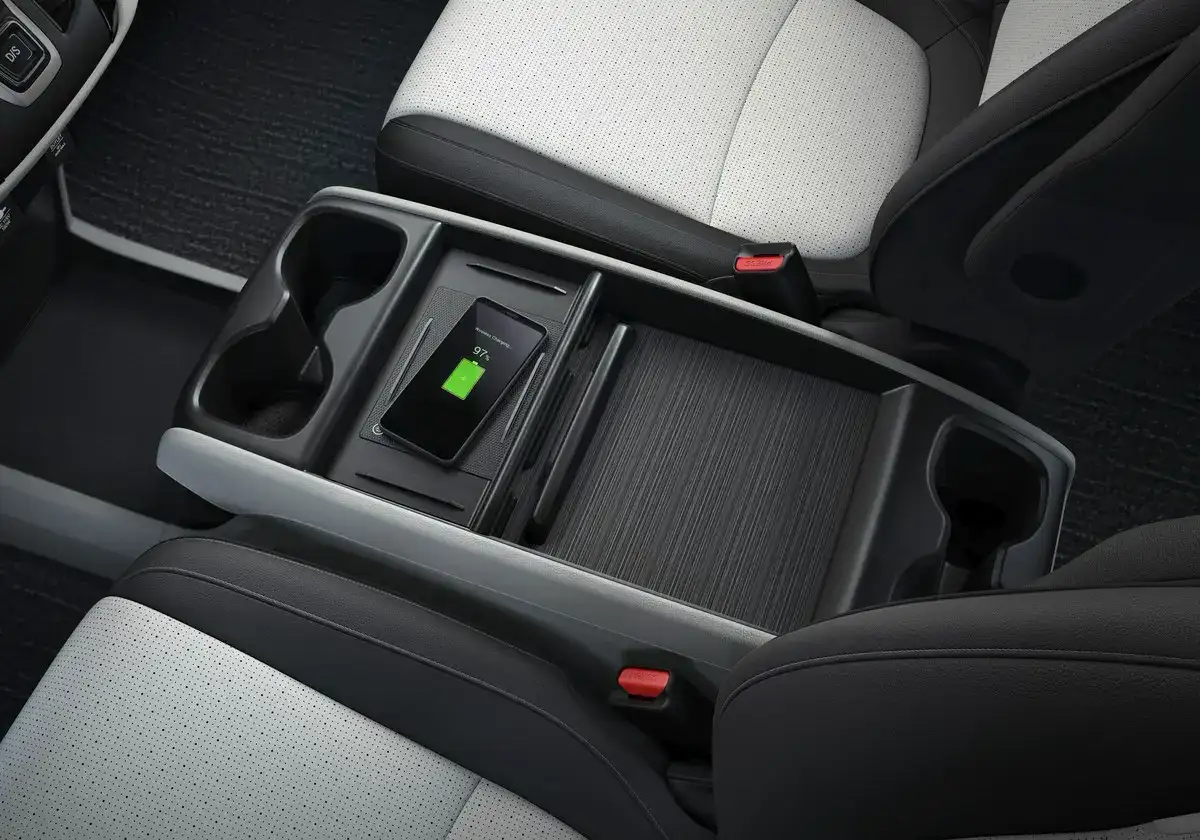
J.D. Power tested a 2026 Odyssey Elite. It is the top-trim level in the model line, and it came with no options because it didn’t need any. You don’t need an Elite to get leather seating with 12-way power adjustment for the driver and 8-way adjustment for the front passenger and heating for both front seats. Those are standard on all Odyssey models, as is a power tailgate, moonroof, wireless charging, tri-zone climate control, and even second-row sunshades. The Elite brings features like the 500-watt, 11-speaker premium audio system, heated steering wheel, and a rear entertainment system, before all the kids are old enough to be entertained by their own cell phones.
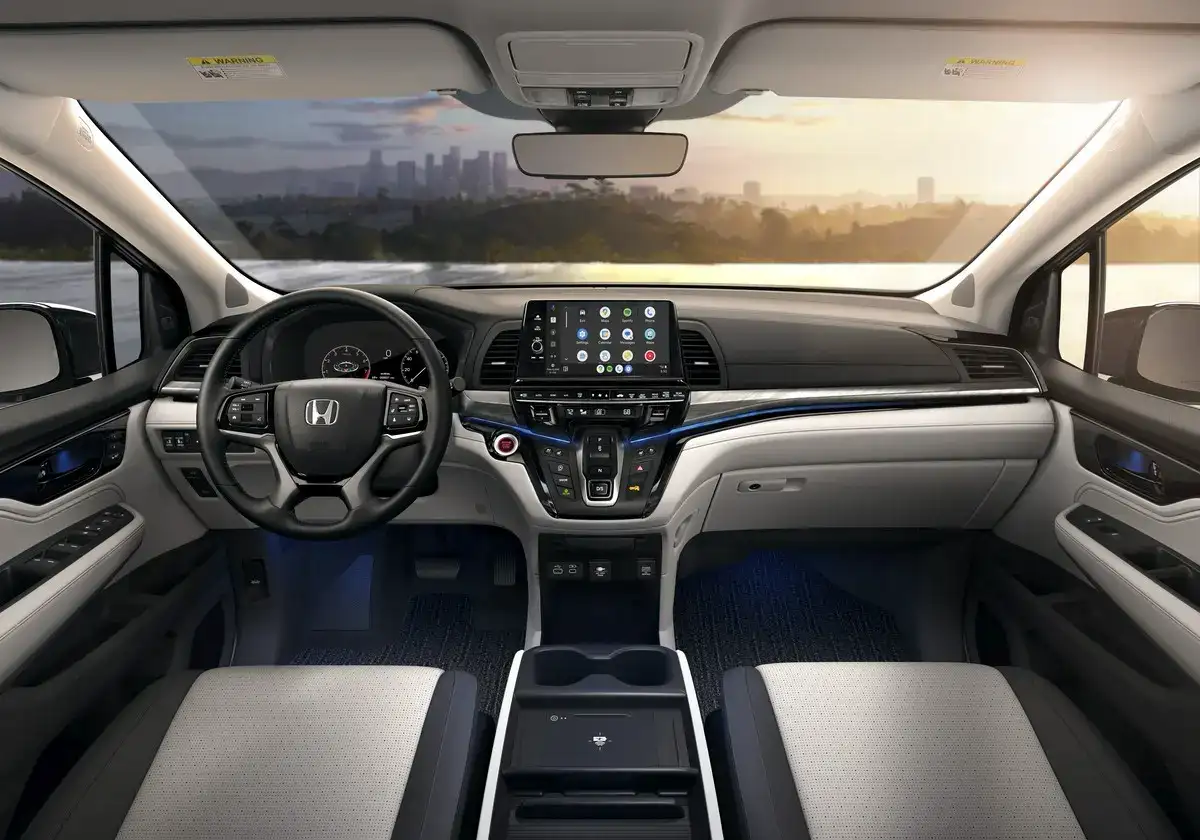
The 9-inch center touchscreen may be small by today’s standards, but that’s because Honda doesn’t cram all its functions into it. Below the screen is a full set of physical climate control buttons and toggles, plus a prominently located volume knob, making all adjustments quick and intuitive. The electronic transmission control is also intuitive, with buttons for drive and park, but pull controls for reverse and the parking brake. Mounting this on the dash frees the center console for cup holders and storage.
The 160 cubic feet of passenger space in the cabin provide plenty of room for all. At 40.9 inches, the second-row seats have the same legroom as the front seats. Legroom in the third row isn’t far behind at 38.1 inches. That’s over three more inches back there than in a Chevrolet Tahoe, making the Odyssey great at accommodating a family after the kids reach their teens and bring along friends of their own. When you need to get those teenagers’ attention, the Odyssey’s standard CabinTalk in-car PA system broadcasts the driver’s or front passenger’s voice through the audio system to both rear sets of seats. Behind everyone is 32.8 cubic feet of cargo space. Compare that to just 25.5 cubic feet in the longer, taller, and 1,000-pound heavier Tahoe.
When not needed, the third row folds flat into a deep bin below floor level. The Magic Slide second-row seats are even more clever. They seat three across, but if you don’t need three, the center backrest folds down to provide an armrest with cupholders. You can also slide the center section forward, which is particularly useful when fitted with a child seat, so Mom and Dad can keep it closer. Or, you can remove the center section and slide one of the outboard seats to the middle position, providing access to the third row without having to fold or slide any seats at all.
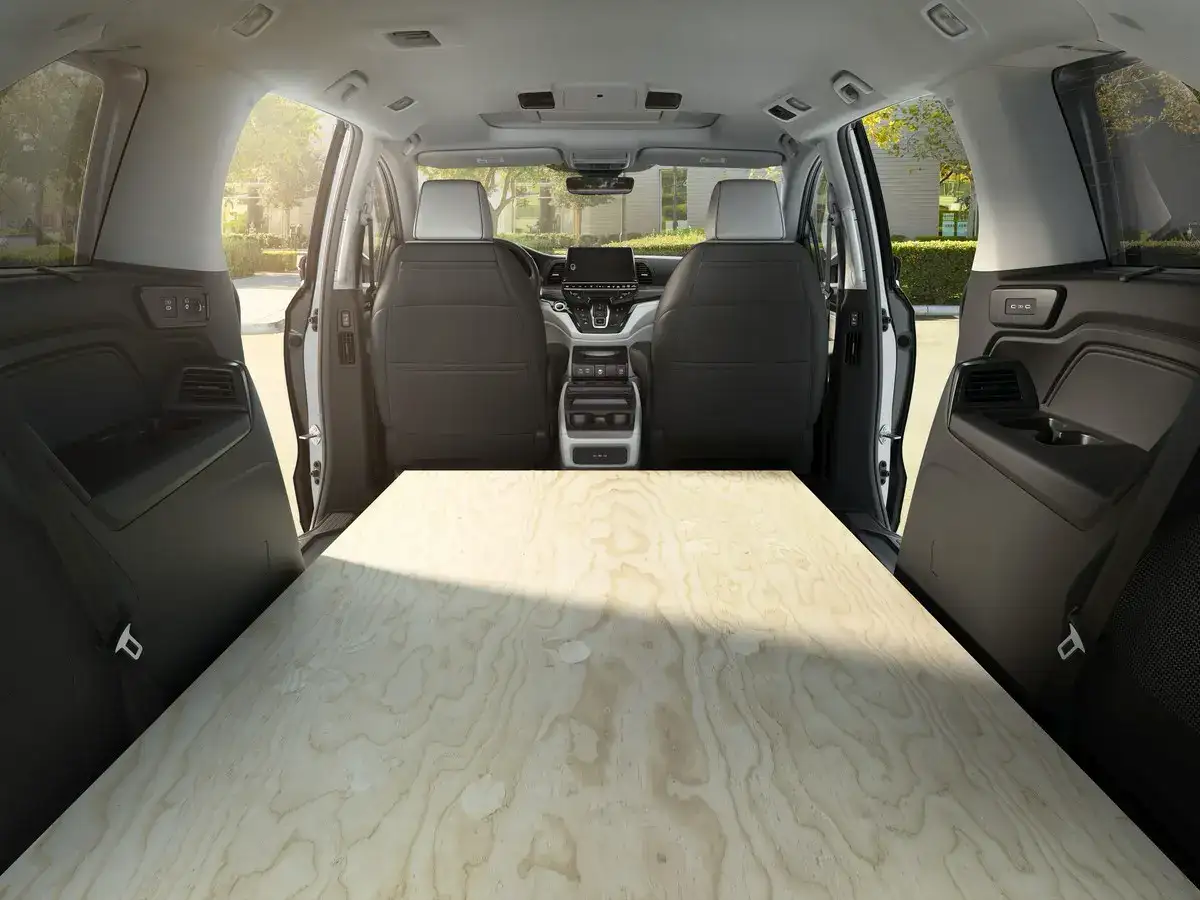
The entire second-row seat set is removed for full cargo mode, and together with the disappearing third row, results in 140.7 cubic feet of cargo space. Forget the 122.7 cu.ft. of maximum cargo space offered by the Tahoe; the Odyssey provides just slightly less than the 144.5 cubic feet of maximum cargo space in a Chevrolet Suburban. J.D. Power noted that the Elite’s “classy, patterned floor mats hide dirt, which is essential in a minivan used frequently to carry children and pets. Additionally, the Odyssey’s cargo area trays and bins help organize smaller items.”
Naturally, the Honda Sensing suite of safety and driver-assistance features, along with the model, earned a 5-star overall safety rating from the NHTSA. Finally, J.D. Power notes that in their 2025 Initial Quality Study (IQS), the Honda Odyssey ranks highest in the Minivan segment.
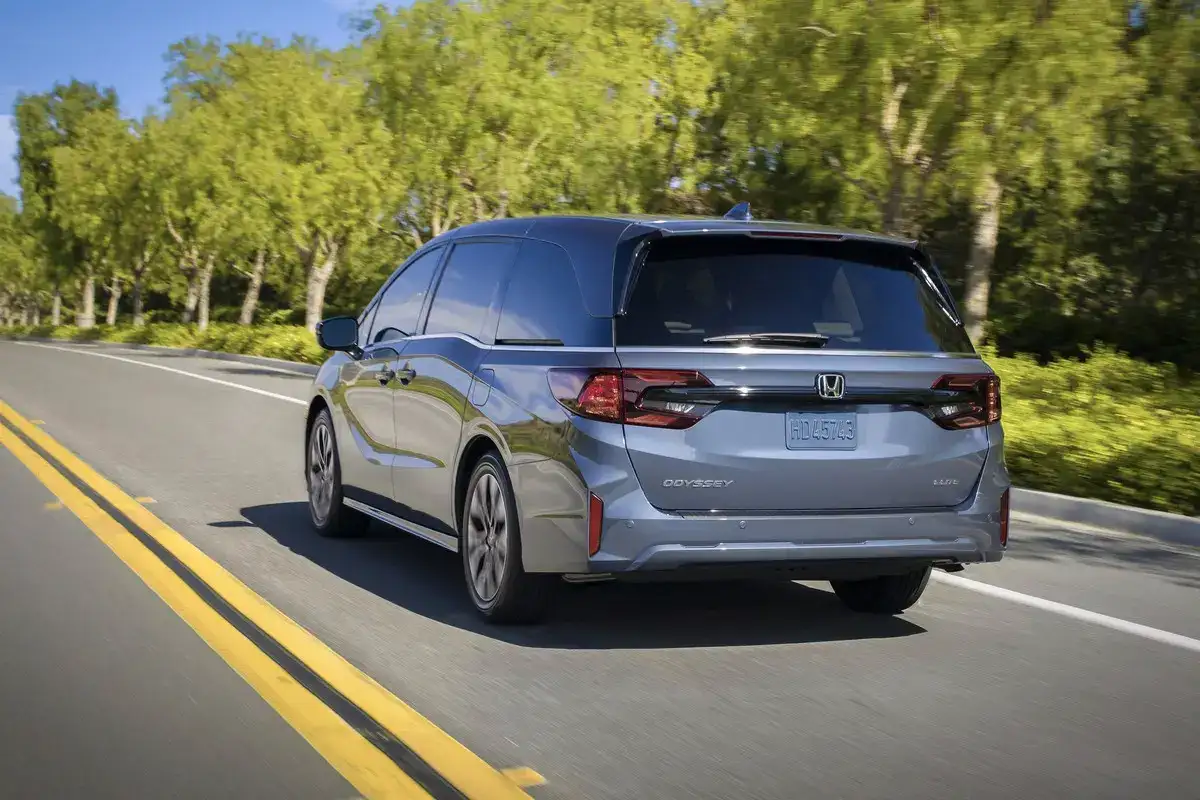
When it is time to carry plenty of people and things, it is hard to beat a minivan, and among minivans, it is hard to beat the Honda Odyssey. Visit Michael Hohl Honda to explore and test drive an Odyssey for yourself.
*19 city/28 highway/22 combined mpg rating. Based on 2026 EPA mileage ratings. Use for comparison purposes only. Your mileage will vary depending on how you drive and maintain your vehicle, driving conditions, and other factors.
0 comment(s) so far on J.D. Power Reviews the 2026 Honda Odyssey