
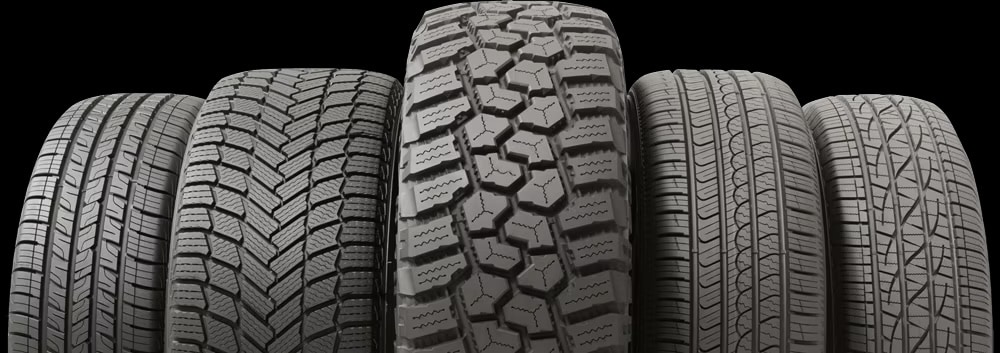
 “Where the Rubber Meets the Road” is a phrase used to describe the most important point of something, or the moment of truth when all theories and speculation are put to a real-world test. The term comes directly from the contact between a vehicle’s tire and the surface it is on. It stems from the fact that all a vehicle’s fancy suspensions and sophisticated technologies can amount to next to nothing if the tires are substandard.
Tires are, in fact, the only thing that connects a road-going vehicle to the world around it. Yet they are often the most overlooked aspect of vehicle maintenance. Unlike many vehicle components, you will absolutely have to replace your tires if you keep your vehicle long enough. Michael Hohl Honda offers tips on when and how to tell if your tires need to be replaced.
A tire’s life is determined by three factors:
-
Condition
-
Tread life
-
Age
 Tire Condition
Condition may be the most visible sign of the need for replacement. A tire that has gone flat due to significant damage from a road hazard, or whose sidewall has been damaged in any way, should be replaced. Unless the tire is relatively new, its counterpart on the opposite side should probably also be replaced, as a new tread matched with worn tread can result in handling inconsistencies. Indeed, if a tire is damaged and the others are near the end of their tread life, it is best to replace all four.
 Tread Life
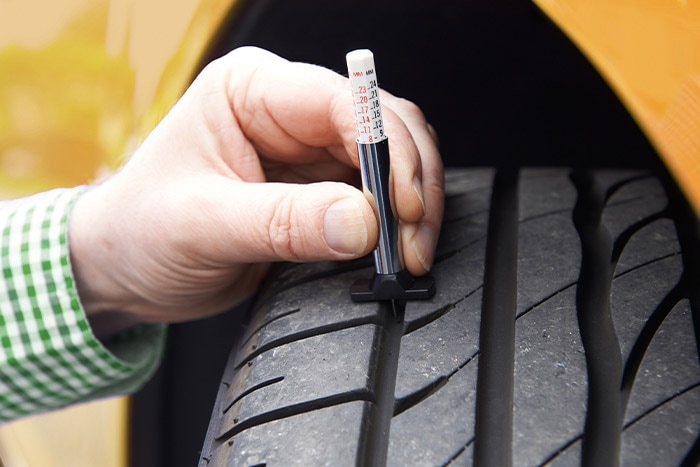
Barring any specific damage, tread life is usually the determining factor in a tire’s viability. While there are hacks, such as sticking a penny into a tire groove and seeing whether you can see Lincoln’s entire head (which would indicate the need for replacement), it is best to use a proper tread depth gauge. It is a simple device that costs between $3 and $10 and is a worthy item to keep in your glove box, right next to the tire pressure gauge. Most measure in 32nds of an inch and/or millimeters (mm). The minimum acceptable tread depth depends on the type of tire:
-
All-Season (the most commonly used tire): 3/32” (2.4 mm)
-
Summer (often on high-performance road vehicles: 2/32” (1.6 mm)
-
Winter (previously called “snow tires”): 4/32” (3.2 mm)
-
All-terrain (off-road focused): 5/32” (4.0 mm)
Obviously, winter and all-terrain tires, which are expected to “dig” into the surface, require deeper tread depth to perform correctly.
When measuring tread depth, check the main grooves of the tire at about three random locations around the tire, including the center and each side. A significant difference in tread depth between the sides of the same tire raises a red flag:
-
Less depth on either the inside or the outside of the tire could indicate an alignment issue
-
Less depth at the center may indicate overinflation.
-
Reduced depth on the sides compared to the center may indicate underinflation.
In all cases, the minimum tread depth should be the figure used in determining the need for tire replacement.
 Tire Age
Finally, there is the issue of tire age. The compounds used in tires oxidize over time, making them harder and more brittle, and generally unable to perform as designed. The maximum recommended age for tire operation is 10 years, and most manufacturers and experts recommend replacement after 10 years of use. This is particularly a factor for recreational vehicles that aren’t used on a daily basis, such as sports cars, dedicated off-road vehicles, or trailers.
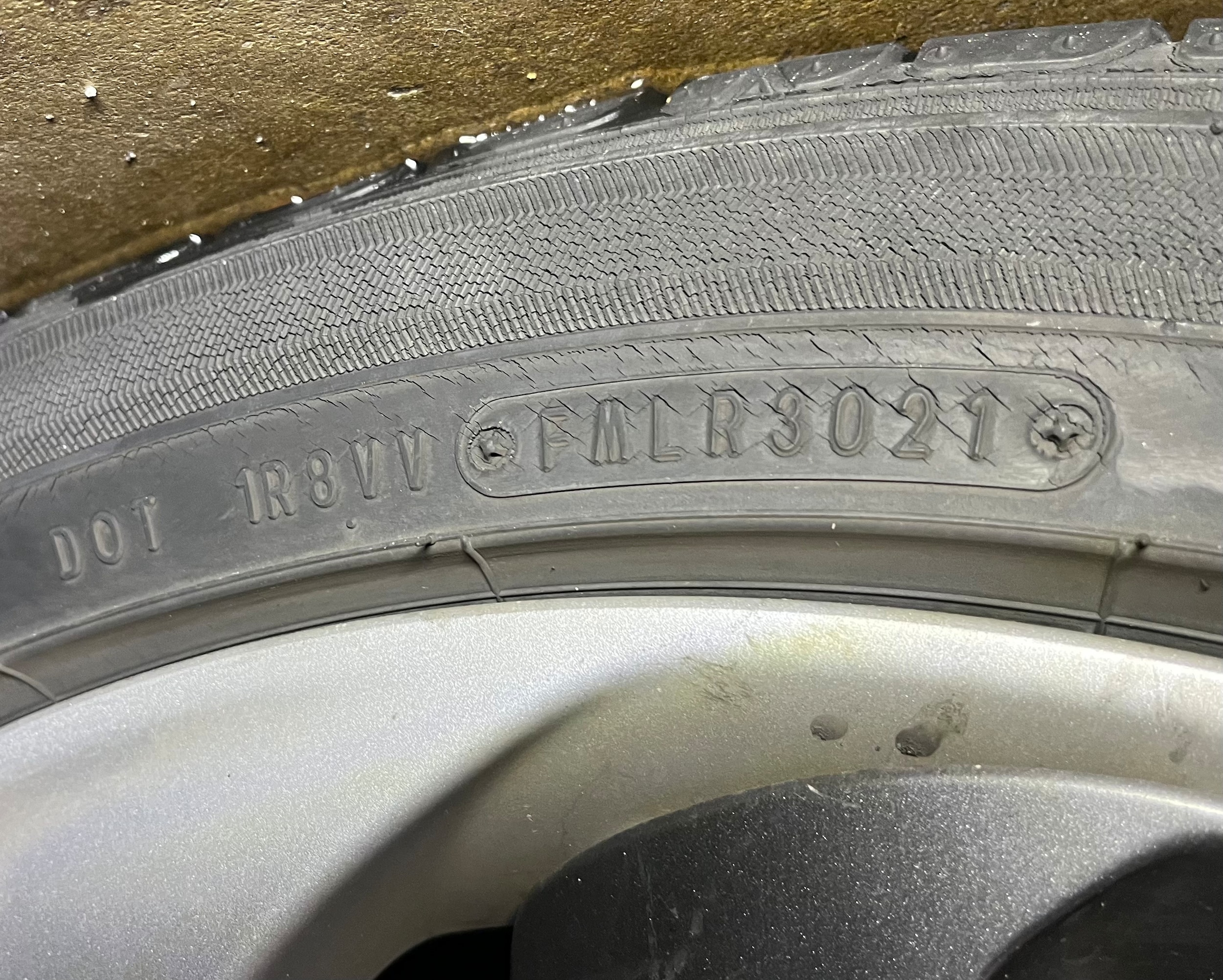
There is no test to determine a tire’s age, but fortunately, none is needed. Since 2000, all tires have their age embossed on the sidewall. It is found in the last four numbers, encircled on the sidewall near the rim, after the DOT letters. In the pictured example, the numbers 3021 indicate that this tire was manufactured in the 30th week (late July) of 2021. That, along with the fissures in the sidewall and a fairly low tread depth, indicates that your author’s Honda Clarity is due for some replacement tires quite soon.
How you should select your replacement tires is the subject of an entirely separate blog post, but in the briefest possible terms:
-
Don’t buy on price. (Your entire vehicle and its occupants depend on these things.)
-
Take into account how you drive your vehicle, the weather you encounter, and the surfaces you drive on.
-
What do you value? (Ultimate performance, long tread life, quietness, etc…)
If you have any further questions about the condition of your tires, don’t hesitate to contact the Michael Hohl Service Department.
